
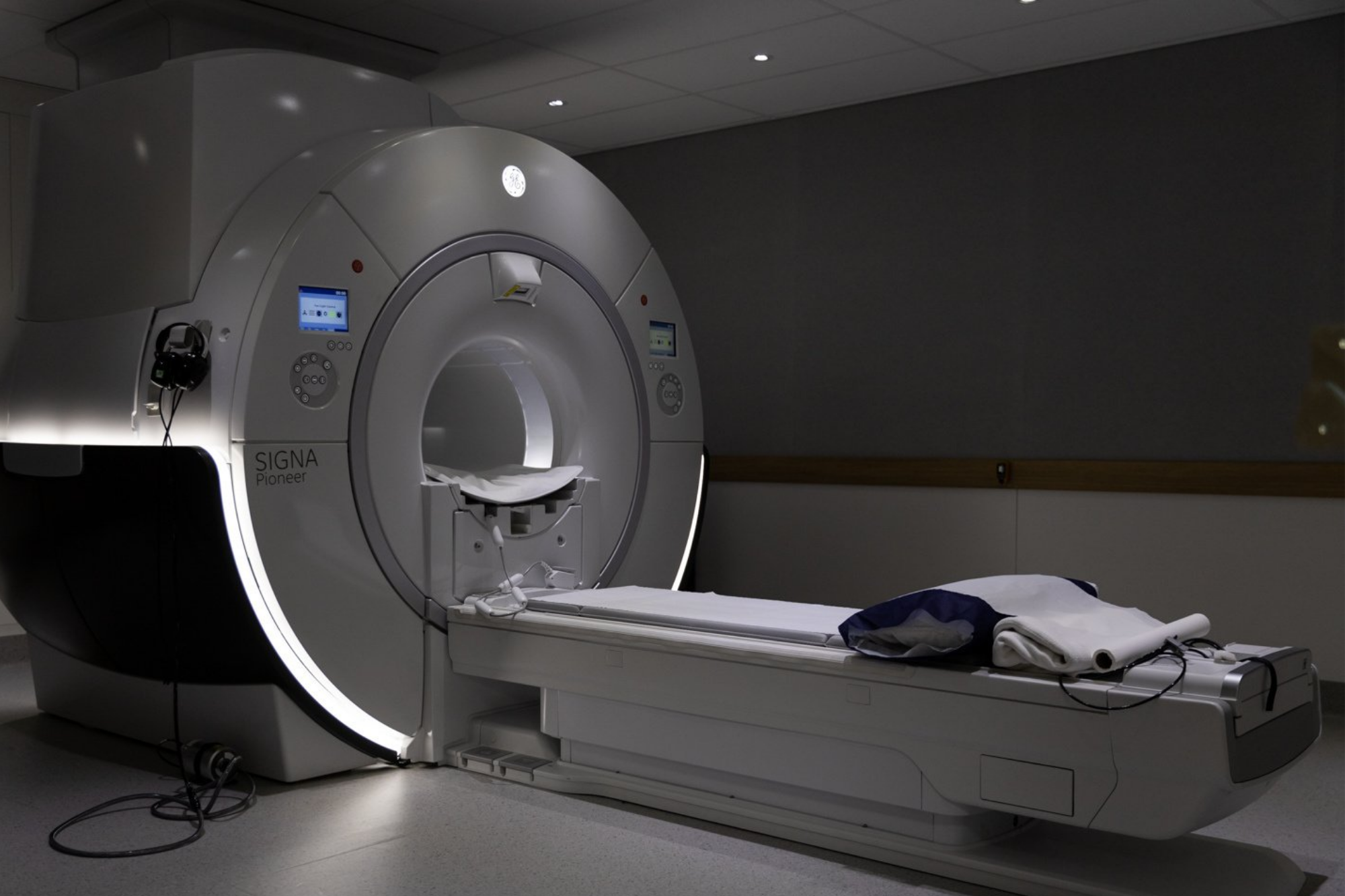
Magnetic Resonance Imaging (MRI)
What is an MRI?
Magnetic Resonance Imaging or an MRI, is a medical imaging technique that uses a strong magnetic field and radio waves to create detailed, cross-sectional images of the internal structures of the human body. Unlike X-rays or CT scans, MRI does not use ionising radiation, making it a non-invasive and safe imaging method.
During an MRI, the patient is placed inside a large, tube-like machine that contains a powerful magnet. Radio waves are directed at the body, causing the hydrogen atoms in the body's tissues to emit signals. These signals are captured by a receiver and processed by a computer to create highly detailed images of the body's soft tissues, organs and structures. MRI is particularly valuable for visualising the brain, spinal cord, joints, muscles, and organs like the heart, liver and kidneys.
MRI can provide essential information for diagnosing a wide range of medical conditions, including neurological disorders, musculoskeletal injuries, cardiovascular conditions and more. It is a versatile tool that helps healthcare professionals obtain detailed images to aid in diagnosis and treatment planning.
What to expect from an MRI appointment?
The area under examination must be positioned at the center of a cylindrical magnet, which may induce feelings of claustrophobia in some patients. Our MRI technologists are highly experienced in comforting anxious patients. The majority of MRI systems at Capital Radiology are designed to be accommodating for those with claustrophobia. They are open cylinders equipped with lighting and gentle airflow.
Prior to commencing the examination, our MRI technologist will ensure your comfort since you must remain perfectly still throughout the scan. If you feel uneasy, it's crucial to communicate this to our staff, allowing them to adjust your position or use additional soft padding to enhance your comfort during the examination.
During the MRI, there will be rhythmic and loud noises, which most patients do not find unpleasant. You will have the option to select your preferred music genre or radio station and will be provided with headphones to make the scan as pleasant as possible. For those who are particularly sensitive to sound, earplugs can be provided. Each patient will also be given a handheld buzzer, which can be used to pause the examination if you need to communicate with the MRI technologist.
On occasion, an intravenous contrast injection called gadolinium may be necessary to enhance the accuracy of the examination. Patients may feel a slight cool sensation at the injection site and may experience a metallic taste.
What preparation is needed for an MRI appointment?
When scheduling your appointment, we will inquire about the purpose of the examination, and you will be asked a set of safety questions regarding metallic implants that could impact your scan. Typically, most MRI scans do not require special preparation, the exception being abdominal examinations, for which you should abstain from eating for 8 hours before the scan. Our team will verify any particular requirements in advance of your appointment.
What do you need to bring to your appointment?
- Your referral form - please note we accept referral forms from all providers
- Medicare card
- Pension or concession card
- Any prior imaging
When can I expect my doctor to receive the results?
Our radiologist will analyse your scan and send the findings directly to your doctor. Subsequently, your referring doctor will examine the results and provide you with an explanation.
Fees & Billing
As a radiology provider dedicated to our local communities, we bulk bill Medicare directly for most cases. However, please verify this with your specific practice before your appointment.

Find a clinic
We have multiple locations across Victoria, Western Australia, and South Australia.
Fees and billing
In most instances, we bulk bill to Medicare, but it is important to check with your individual clinic prior to your service.